Page Not Found
Page not found. Your pixels are in another canvas.

A list of all the posts and pages found on the site. For you robots out there is an XML version available for digesting as well.
Page not found. Your pixels are in another canvas.
About me
This is a page not in th emain menu
Published:
The EAB & CiTER Biometrics Workshop was held at Idiap in April 2023. I had the privilege to attend with one of my PhD Thesis supervisor, Dr. Miguel González. At a recent research workshop, I found quite interesting the discussions on Biometric Template Protection—a topic previously unexplored by me. Discussions around ISO regulations concerning biometric templates and their properties were particularly useful to me, and also presented a promising avenue for future exploration.
Published:
Base code with available implementation of BinaryFaceNet, an efficient approach for Very Low Resolution Face Recognition using Binary Neural Networks, an outcome of my PhD Thesis project.
Link to Repository 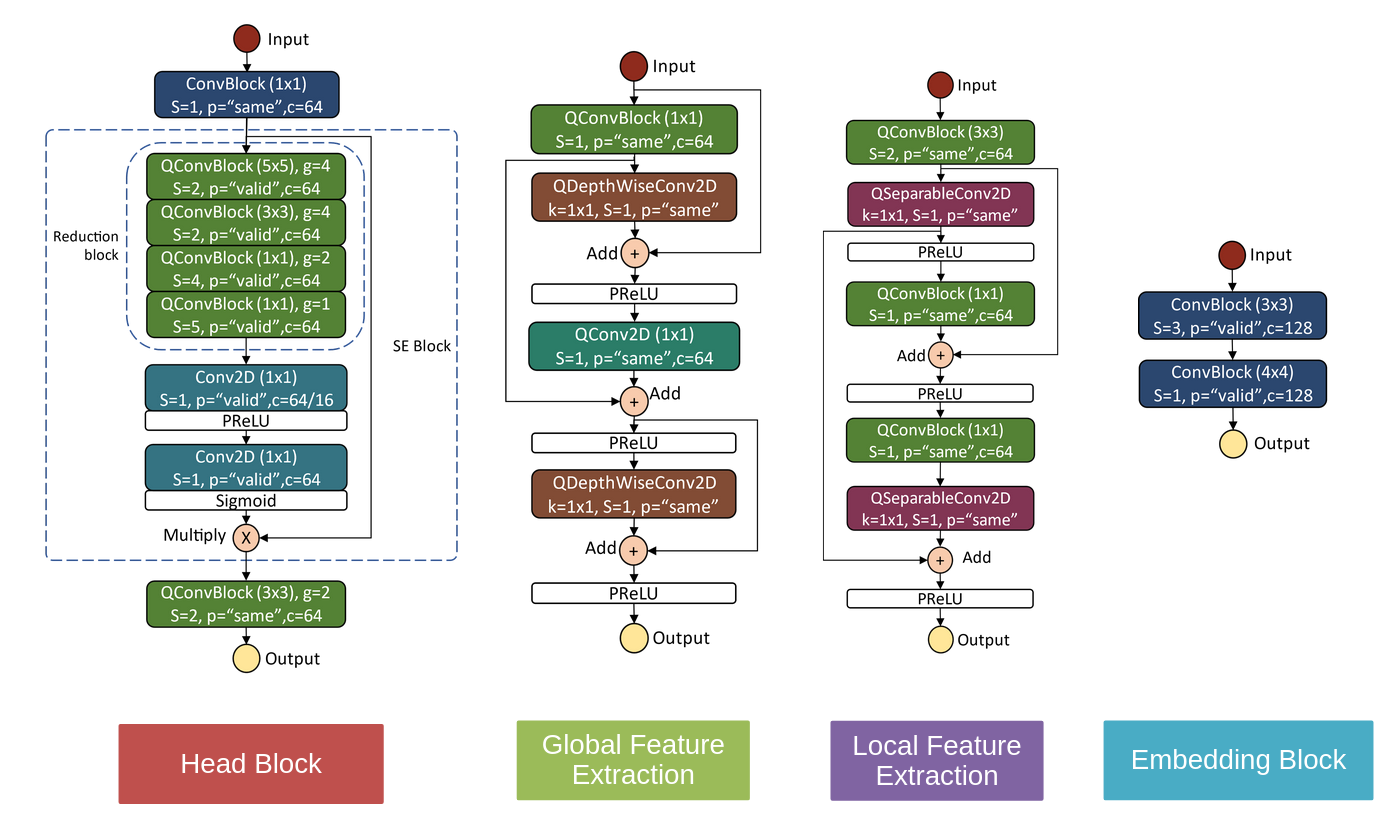
Published:
This is a forked base code of Lightweight Face Anti-Spoofing modified for patching it to Python 3.10 and adding my custom networks and evaluation code.
Link to Repository 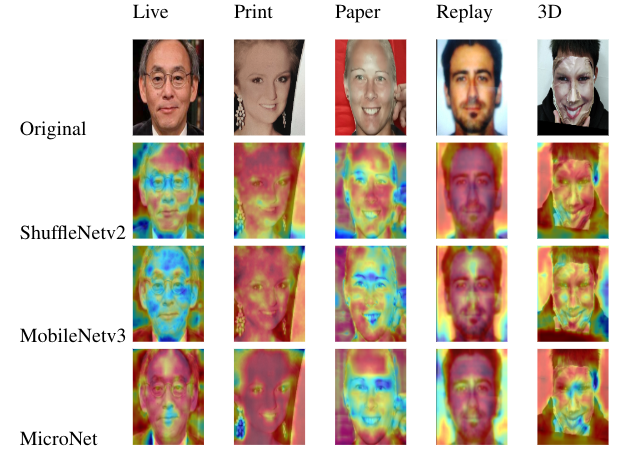
Published:
This is the code repository release for the paper ‘Assessing the Performance of Efficient Face Anti-Spoofing Detection Against Physical and Digital Presentation Attacks’ accepted at the 5th Face Anti-Spoofing Workshop and Challenge@CVPR2024.
Link to Repository 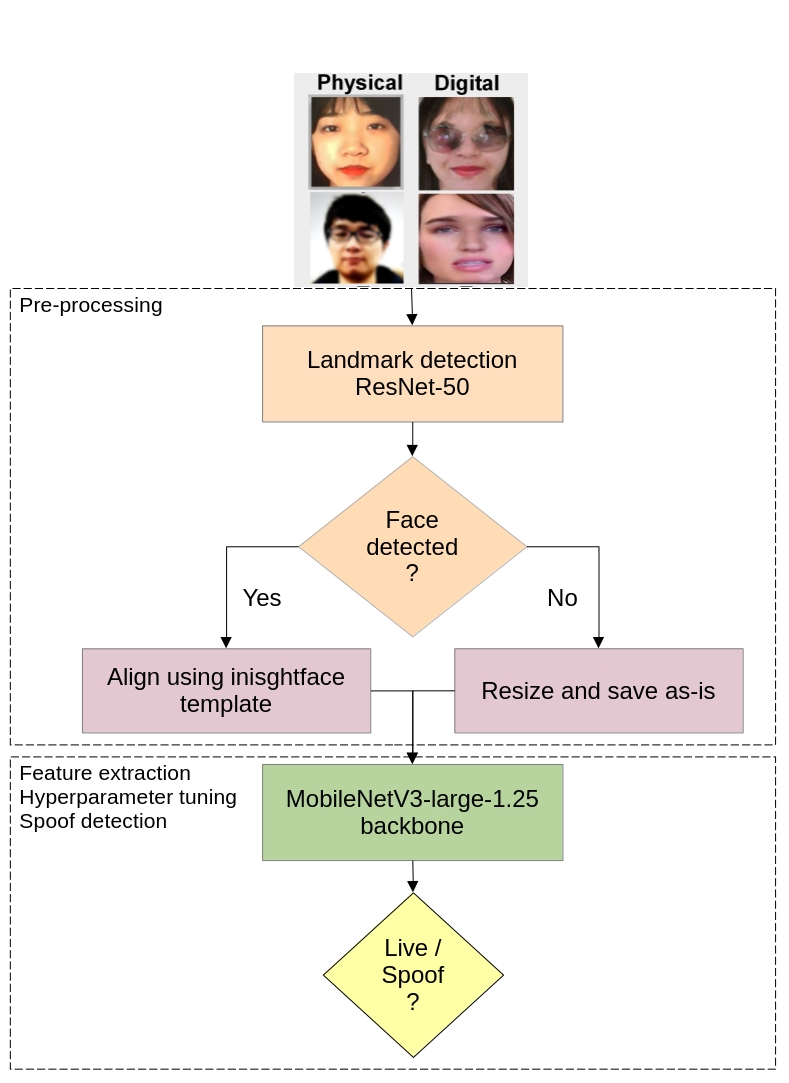
Published:
This is the code repository release for the paper ‘SwiftFaceFormer: An Efficient and Lightweight Hybrid Architecture for Accurate Face Recognition Applications’ accepted at the 2024 27th International Conference on Pattern Recognition (ICPR).
Link to Repository 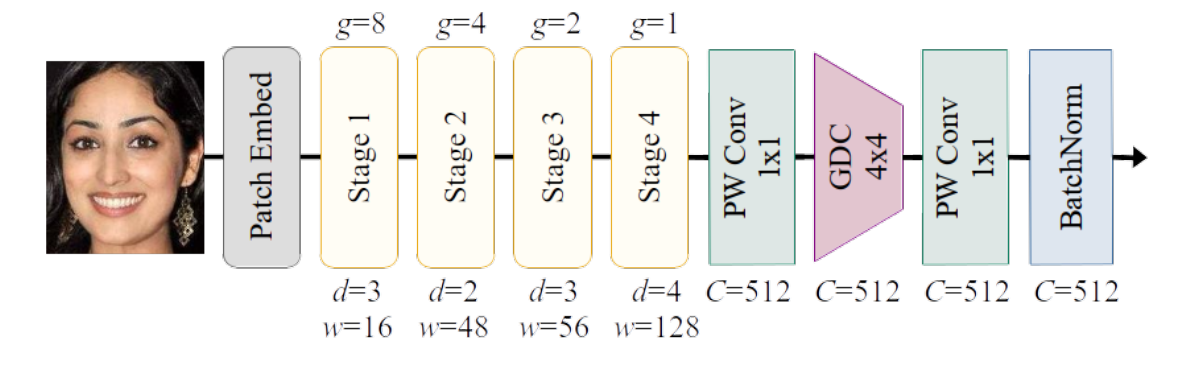
Published:
This is the code repository release for the paper ‘Identity-Preserving Aging and De-Aging of Faces in the StyleGAN Latent Space’ accepted at the IEEE International Joint Conference on Biometrics (IJCB) 2025.
Link to Repository 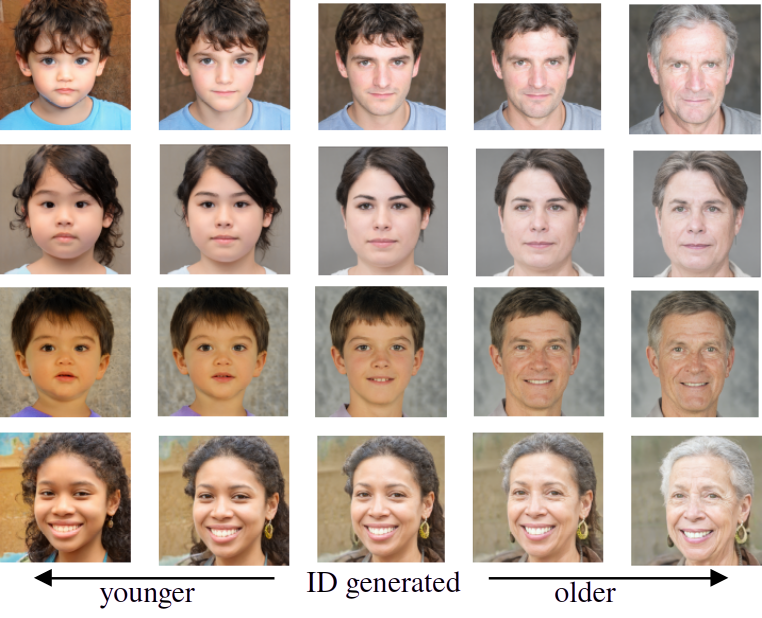
Published:
This is the code repository release for the paper ‘Improving Low-Resolution Face Recognition under Limited Data: How Synthetic Data Generation Can Close the Domain Gap’ accepted at the IEEE International Joint Conference on Biometrics (IJCB) 2026.
Link to Repository 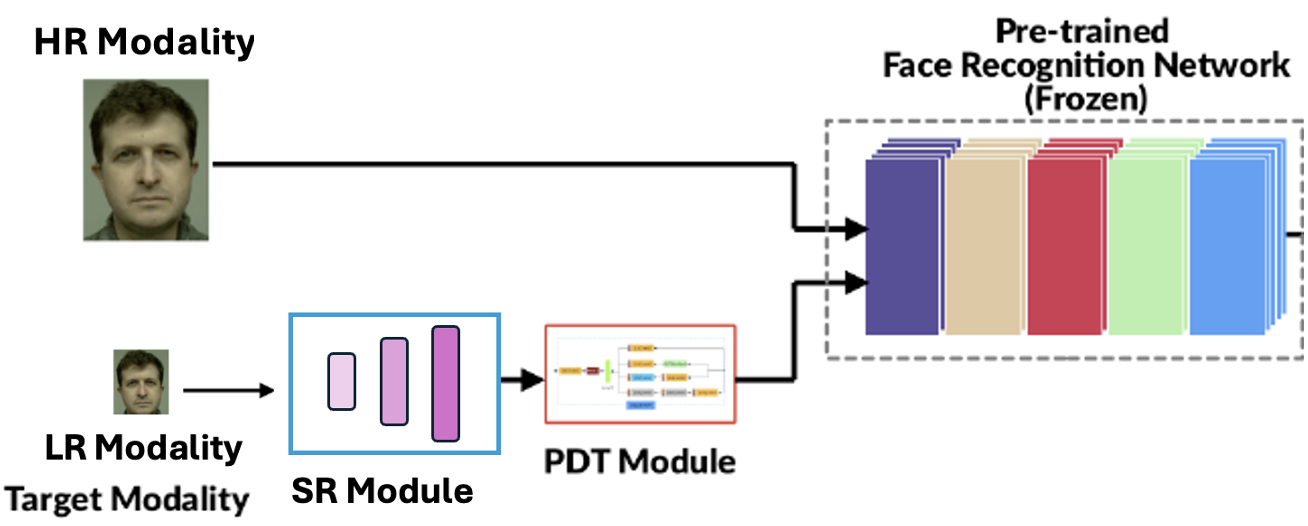
Published in 2019 International Conference on Computer Vision Workshop (ICCVW), 2019
The recent success of convolutional neural networks has led to the development of a variety of new effective and efficient architectures. However, few of them have been designed for the specific case of face recognition. Inspired on the state-of-the-art ShuffleNetV2 model, a lightweight face architecture is presented in this paper. The proposal, named ShuffleFaceNet, introduces significant modifications in order to improve face recognition accuracy. First, the Global Average Pooling layer is replaced by a Global Depth-wise Convolution layer, and Parametric Rectified Linear Unit is used as a non-linear activation function. Under the same experimental conditions, ShuffleFaceNet achieves significantly superior accuracy than the original ShuffleNetV2, maintaining the same speed and compact storage. In addition, extensive experiments conducted on three challenging benchmark face datasets, show that our proposal improves not only state-of-the-art lightweight models but also very deep face recognition models.
Recommended citation: Y. Martindez-Díaz, L. S. Luevano, H. Mendez-Vazquez, M. Nicolas-Diaz, L. Chang and M. Gonzalez-Mendoza, "ShuffleFaceNet: A Lightweight Face Architecture for Efficient and Highly-Accurate Face Recognition," 2019 IEEE/CVF International Conference on Computer Vision Workshop (ICCVW), Seoul, Korea (South), 2019, pp. 2721-2728, doi: 10.1109/ICCVW.2019.00333.
Download Paper
Published in 25th International Conference on Pattern Recognition (ICPR) 2022, 2021
Typically, real-world requirements to deploy face recognition models in unconstrained surveillance scenarios demand to identify low-resolution faces with extremely low computational cost. In the last years, several methods based on complex deep learning models have been proposed with promising recognition results but at a high computational cost. Inspired by the compactness and computation efficiency of lightweight deep face networks and their high accuracy on general face recognition tasks, in this work we propose to benchmark two recently introduced lightweight face models on low-resolution surveillance imagery to enable efficient system deployment. In this way, we conduct a comprehensive evaluation on the two typical settings: LR-to-HR and LR-to-LR matching. In addition, we investigate the effect of using trained models with downsampled synthetic data from high-resolution images, as well as the combination of different models, for face recognition on real low-resolution images. Experimental results show that the used lightweight face models achieve state-of-the-art results on low-resolution benchmarks with low memory footprint and computational complexity. Moreover, we observed that combining models trained with different degradations improves the recognition accuracy on low-resolution surveillance imagery, which is feasible due to their low computational cost.
Recommended citation: Y. Martínez-Díaz, H. Méndez-Vázquez, L. S. Luevano, L. Chang and M. Gonzalez-Mendoza, "Lightweight Low-Resolution Face Recognition for Surveillance Applications," 2020 25th International Conference on Pattern Recognition (ICPR), Milan, Italy, 2021, pp. 5421-5428, doi: 10.1109/ICPR48806.2021.9412280.
Download Paper
Published in Artificial Intelligence Review, 2021
This paper studies the impact of lightweight face models on real applications. Lightweight architectures proposed for face recognition are analyzed and evaluated on different scenarios. In particular, we evaluate the performance of five recent lightweight architectures on five face recognition scenarios: image and video based face recognition, cross-factor and heterogeneous face recognition, as well as active authentication on mobile devices. In addition, we show the lacks of using common lightweight models unchanged for specific face recognition tasks, by assessing the performance of the original lightweight versions of the lightweight face models considered in our study. We also show that the inference time on different devices and the computational requirements of the lightweight architectures allows their use on real-time applications or computationally limited platforms. In summary, this paper can serve as a baseline in order to select lightweight face architectures depending on the practical application at hand. Besides, it provides some insights about the remaining challenges and possible future research topics.
Recommended citation: Martínez-Díaz, Y., Nicolás-Díaz, M., Méndez-Vázquez, H., Luevano, L.S. et al. Benchmarking lightweight face architectures on specific face recognition scenarios. Artif Intell Rev 54, 6201–6244 (2021). https://doi.org/10.1007/s10462-021-09974-2
Download Paper
Published in IEEE Access, 2021
In the past decade, research in the face recognition area has advanced tremendously, particularly in uncontrolled scenarios (face recognition in the wild). This advancement has been achieved partly due to the massive popularity and effectiveness of deep convolutional neural networks and the availability of larger unconstrained datasets. However, several face recognition challenges remain in the context of very low resolution homogeneous (same domain) and heterogeneous (different domain) face recognition. In this survey, we study the seminal and novel methods to tackle the very low resolution face recognition problem and provide an in-depth analysis of their design, effectiveness, and efficiency for a real-time surveillance application. Furthermore, we analyze the advantage of employing deep learning convolutional neural networks, while presenting future research directions for effective deep learning network design in this context. 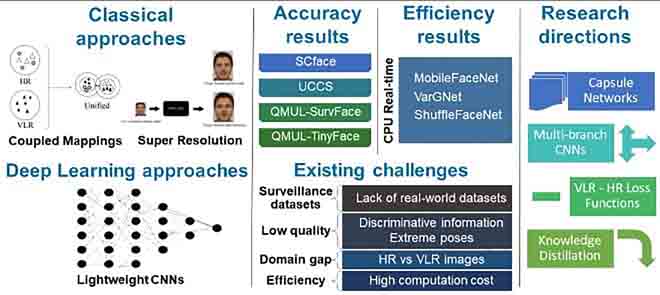
Recommended citation: L. S. Luevano, L. Chang, H. Méndez-Vázquez, Y. Martínez-Díaz and M. González-Mendoza, "A Study on the Performance of Unconstrained Very Low Resolution Face Recognition: Analyzing Current Trends and New Research Directions," in IEEE Access, vol. 9, pp. 75470-75493, 2021, doi: 10.1109/ACCESS.2021.3080712.
Download Paper
Published in IEEE Access, 2021
Given the current COVID-19 pandemic, most people wear a mask to effectively prevent the spread of the contagious disease. This sanitary measure has caused a significant drop in the effectiveness of current face recognition methods when handling masked faces on practical applications such as face access control, face attendance, and face authentication-based mobile payment. Under this situation, recent efforts have been focused on boosting the performance of the existing face recognition technology on masked faces. Some solutions trying to tackle this issue fine-tune the existing deep learning face recognition models on synthetic masked images, while others use the periocular region as a naive manner to eliminate the adverse effect of COVID-19 masks. Although the accuracy of masked face recognition remains an important issue, in the last few years, the development of efficient and lightweight face recognition methods has received an increased attention in the research community. In this paper, we study the effectiveness of three state-of-the-art lightweight face recognition models for addressing accurate and efficient masked face recognition, considering both fine-tuning on masked faces and periocular images. For the experimental evaluation, we create both real and simulated masked face databases as well as periocular datasets. Extensive experiments are conducted to determine the most effective solution and state further steps for the research community. The obtained results disclose that fine-tuning existing state-of-the-art face models on masked images achieve better performance than using periocular-based models. Besides, we evaluate and analyze the effectiveness of the trained masked-based models on well-established unmasked benchmarks for face recognition and assess the efficiency of the used lightweight architectures in comparison with state-of-the-art face models.
Recommended citation: Y. Martínez-Díaz, H. Méndez-Vázquez, L. S. Luevano, M. Nicolás-Díaz, L. Chang and M. González-Mendoza, "Towards Accurate and Lightweight Masked Face Recognition: An Experimental Evaluation," in IEEE Access, vol. 10, pp. 7341-7353, 2022, doi: 10.1109/ACCESS.2021.3135255.
Download Paper
Published in 26th International Conference on Pattern Recognition (ICPR) 2022, 2022
When storing face biometric samples in accordance with ISO/IEC 19794 as JPEG2000 encoded images, it is necessary to encrypt them for the sake of users’ privacy. Literature suggests selective encryption of JPEG2000 images as fast and efficient method for encryption, the trade-off is that some information is left in plaintext. This could be used by an attacker, in case the encrypted biometric samples are leaked. In this work, we will attempt to utilize a convolutional neural network to perform cryptanalysis of the encryption scheme. That is, we want to assess if there is any information left in plaintext in the selectively encrypted face images which can be used to identify the person. The chosen approach is to train CNNs for biometric face recognition not only with plaintext face samples but additionally conduct a refinement training with partially encrypted data. If this system can successfully utilize encrypted face samples for biometric matching, we can show that the information left in encrypted biometric face samples is information actually usable for biometric recognition.The method works and we can show that a supposedly secure biometric sample still contains identifying information on average over the whole database.
Recommended citation: H. Hofbauer, Y. Martínez-Díaz, L. S. Luevano, H. Méndez-Vázquez and A. Uhl, "Utilizing CNNs for Cryptanalysis of Selective Biometric Face Sample Encryption," 2022 26th International Conference on Pattern Recognition (ICPR), Montreal, QC, Canada, 2022, pp. 892-899, doi: 10.1109/ICPR56361.2022.9956664.
Download Paper
Published in IEEE/CVF Conference on Computer Vision and Pattern Recognition (CVPR) Workshops 2023, 2023
Detecting spoof faces is crucial in ensuring the robustness of face-based identity recognition and access control systems, as faces can be captured easily without the user’s cooperation in uncontrolled environments. Several deep models have been proposed for this task, achieving high levels of accuracy but at a high computational cost. Considering the very good results obtained by lightweight deep networks on different computer vision tasks, in this work we explore the effectiveness of this kind of architectures for face anti-spoofing. Specifically, we asses the performance of three lightweight face models on two challenging benchmark databases. The conducted experiments indicate that face anti-spoofing solutions based on lightweight face models are able to achieve comparable accuracy results to those obtained by state-of-the-art very deep models, with a significantly lower computational complexity.
Recommended citation: Yoanna Martínez-Díaz, Heydi Méndez-Vázquez, Luis S. Luevano, Miguel Gonzalez-Mendoza. "Exploring the Effectiveness of Lightweight Architectures for Face Anti-Spoofing". Proceedings of the IEEE/CVF Conference on Computer Vision and Pattern Recognition (CVPR) Workshops, 2023, pp. 6391-6401
Download Paper
Published in International Workshop on Artificial Intelligence and Pattern Recognition, 2023
This paper studies the effectiveness of Blind Face Restoration methods to boost the performance of face recognition systems on low-resolution images. We investigate the use of three blind face restoration techniques, which have demonstrated impressive results in generating realistic high-resolution face images. Three state-of-the-art face recognition methods were selected to assess the impact of using the generated high-resolution images on their performance. Our analysis includes both, synthesized and native low-resolution images. The conducted experimental evaluation show that this is still an open research problem.
Recommended citation: Yoanna Martínez-Díaz, Luis S. Luevano, Heydi Méndez-Vázquez. "Effectiveness of Blind Face Restoration to Boost Face Recognition Performance at Low-Resolution Images". Progress in Artificial Intelligence and Pattern Recognition. IWAIPR 2023. Lecture Notes in Computer Science, vol 14335. Springer, Cham. https://doi.org/10.1007/978-3-031-49552-6_39
Download Paper
Published in IEEE/CVF Conference on Computer Vision and Pattern Recognition (CVPR) Workshops 2024, 2024
In this paper, we examine how pre-processing and training methods impact on the performance of Lightweight CNNs through evaluations on MobileNetV3 with a spoofing detection head, dubbed ”MobileNetV3-Spoof”. Using the UniAttackData dataset, which covers a broad spectrum of spoofing scenarios including deepfake and adversarial attack samples, we assess how well the model performs with over different setups, including pre-trained models and models trained from scratch with or without initial face detection and alignment. Our results show that pre-processing steps significantly boost the model’s ability to identify spoof samples, especially against complex attacks. Through detailed comparisons, we offer insights that could guide data curation and the creation of more effective and efficient anti-spoofing techniques suitable for real-world use in the era of digital face attacks.
Recommended citation: Luis S. Luevano, Yoanna Martínez-Díaz, Heydi Méndez-Vázquez, Miguel Gonzalez-Mendoza, Davide Frey. "Assessing the Performance of Efficient Face Anti-Spoofing Detection Against Physical and Digital Presentation Attacks". Proceedings of the IEEE/CVF Conference on Computer Vision and Pattern Recognition (CVPR) Workshops, 2024.
Download Paper
Published in 2024 27th International Conference on Pattern Recognition (ICPR), 2024
With the growing breakthrough of deep learning-based face recognition, the development of lightweight models that achieve high accuracy with computational and memory efficiency has become paramount, especially for deployment on embedded domains. While Vision Transformers have shown significant promising results in various computer vision tasks, their adaptability to resource-constrained devices remains a significant challenge. This paper introduces SwiftFaceFormer, a new efficient, and lightweight family of face recognition models inspired by the hybrid SwiftFormer architecture. Our proposal not only retains the representational capacity of its predecessor but also introduces efficiency improvements, enabling enhanced face recognition performance at a fraction of the computational cost. We also propose to enhance the verification performance of our original most lightweight variant by using a training paradigm based on Knowledge Distillation. Through extensive experiments on several face benchmarks, the presented SwiftFaceFormer demonstrates high levels of accuracy compared to the original SwiftFormer model, and very competitive results with respect to state-of-the-art deep face recognition models, providing a suitable solution for real-time, on-device face recognition applications. Our code is available at https://github.com/Inria-CENATAV-Tec/SwiftFaceFormer
Recommended citation: Luis S. Luevano, Yoanna Martínez-Díaz, Heydi Méndez-Vázquez, Miguel Gonzalez-Mendoza, Davide Frey. "SwiftFaceFormer: An Efficient and Lightweight Hybrid Architecture for Accurate Face Recognition Applications". 2024 27th International Conference on Pattern Recognition (ICPR).
Download Paper
Published in IEEE Joint Conference on Biometrics (IJCB) 2025, 2025
Face aging or de-aging with generative AI has gained significant attention for its applications in such fields like forensics, security, and media. However, most state of the art methods rely on conditional Generative Adversarial Networks (GANs), Diffusion-based models, or Visual Language Models (VLMs) to age or de-age faces based on predefined age categories and conditioning via loss functions, fine-tuning, or text prompts. The reliance on such conditioning leads to complex training requirements, increased data needs, and challenges in generating consistent results. Additionally, identity preservation is rarely taken into account or evaluated on a single face recognition system without any control or guarantees on whether identity would be preserved in a generated aged/de-aged face. In this paper, we propose to synthesize aged and de-aged faces via editing latent space of StyleGAN2 using a simple support vector modeling of aging/de-aging direction and several feature selection approaches. By using two state-of-the-art face recognition systems, we empirically find the identity preserving subspace within the StyleGAN2 latent space, so that an apparent age of a given face can changed while preserving the identity. We then propose a simple yet practical formula for estimating the limits on aging/de-aging parameters that ensures identity preservation for a given input face. Using our method and estimated parameters we have generated a public dataset of synthetic faces at different ages that can be used for benchmarking cross-age face recognition, age assurance systems, or systems for detection of synthetic images. Our code and dataset are available at the project page https://www.idiap.ch/paper/agesynth/
Recommended citation: Luis S. Luevano, Pavel Korshunov, Sébastien Marcel. "Identity-Preserving Aging and De-Aging of Faces in the StyleGAN Latent Space". IEEE Joint Conference on Biometrics (IJCB) 2025.
Download Paper
Published in IEEE International Joint Conference on Biometrics (IJCB) 2026, 2026
The continuous growth in cross-border mobility places increasing pressure on existing border control infrastructures, motivating on-the-move biometric authentication, in which travellers are identified directly inside their vehicles at checkpoints. Face recognition is well-suited to this setting, as it can be acquired passively and at a distance. Its development, however, is hindered by the lack of representative datasets: existing benchmarks are collected in controlled environments and do not capture the challenges inherent to vehicular acquisition, including motion blur, variable illumination, occlusions, and cross-spectral enrollment. To address this gap, we introduce DriveFace, a dataset for on-the-move face recognition in border-control scenarios, comprising NIR vehicle-crossing videos paired with smartphone-based pre-enrollment data. Baseline evaluations with state-of-the-art models show clear performance limitations under these realistic conditions, highlighting the need for dedicated methods to advance the field.
Recommended citation: Anjith George, Luis S. Luevano, Alain Komaty, Zeina Al Amine, Vidit Vidit, Sébastien Marcel. "DriveFace: A Cross-Spectral Through-Glass Face Dataset for On-the-Move Vehicular Border Control". IEEE International Joint Conference on Biometrics (IJCB) 2026.
Download Paper
Published in IEEE International Joint Conference on Biometrics (IJCB) 2026, 2026
Efficient border control is becoming a significant global challenge, mainly due to severe congestion and extended passenger waiting times. To mitigate these bottlenecks and facilitate passenger flow, biometric technologies are increasingly deployed to streamline identity verification and enhance crossing efficiency. Technical limitations frequently impede biometric identification, particularly in long-range surveillance, where systems must deal with adverse atmospheric conditions and degraded image quality. While high-quality frameworks like BRIAR exist, they are frequently restricted to specific government agencies. This paper introduces GaitFace, a new public dataset that contains face and gait data captured at long distances. To ensure that the research reflects authentic border scenarios, we use Pre-Enrollment data, where a traveler registers via a mobile device, and “In-the-Wild” captures, which records individuals at a distance across multiple viewing angles and different cameras. Benchmarking SOTA face and gait models reveals that current architectures fail under low-resolution and elevated viewpoints despite success with optical assistance. GaitFace exposes these critical vulnerabilities, providing a rigorous public benchmark to drive more robust, unconstrained biometric research.
Recommended citation: Alain Komaty, Luis S. Luevano, Vidit Vidit, Anjith George, Zeina Al Amine, Sébastien Marcel. "GaitFace: A Multimodal Dataset for Long-Range Person Identification". IEEE International Joint Conference on Biometrics (IJCB) 2026.
Download Paper
Published in IEEE International Joint Conference on Biometrics (IJCB) 2026, Focus Session on Generative AI for Fair and Secure Biometrics under Limited Data, 2026
Face Recognition (FR) systems in surveillance settings often encounter Low Resolution (LR) faces, those whose face region falls below the standard 112 × 112 input size. While labelled High Resolution (HR) training data is abundant, labelled native-LR data, and above all paired native-LR/HR data, is scarce. One workaround is to synthesize LR data from the available HR faces, but how much synthesis effort is repaid in recognition accuracy remains unclear. We present a study of simple synthetic generation strategies for a compact, edge device-oriented face recognition system, spanning interpolation-based degradation, knowledge distillation, a Prepended Domain Transformer (PDT), Real-ESRGAN-style degradation, and a learned Super Resolution (SR) front-end with an identity-aware loss. We evaluate these strategies on synthetic cross-resolution face benchmarks (LFW, CFP-FP, AgeDB-30) and on TinyFace, a real-world native LR dataset, and expose a synthetic–real gap: the degradation setting that is optimal on synthetic benchmarks is not the one that is optimal on real LR. We find that more synthesis effort does not help monotonically: the learned SR front-end does not surpass a direct feed of the aligned LR image into a strong backbone, while simple interpolation augmentation of a compact backbone is the only synthesis that improves over its own baseline. We conclude that generative methods for LR face recognition must be validated on real LR and against a direct-feed baseline, and release our pipeline at https://idiap.ch/paper/synth-lrfr.
Recommended citation: Luis S. Luevano, Ünsal Öztürk, Hatef Otroshi Shahreza, Anjith George, Sébastien Marcel. "Improving Low-Resolution Face Recognition under Limited Data: How Synthetic Data Generation Can Close the Domain Gap". IEEE International Joint Conference on Biometrics (IJCB) 2026, Focus Session on Generative AI for Fair and Secure Biometrics under Limited Data.
Download Paper
Published:
This is a description of your talk, which is a markdown files that can be all markdown-ified like any other post. Yay markdown!
Published:
This is a description of your conference proceedings talk, note the different field in type. You can put anything in this field.
Undergraduate & Graduate courses, Tecnológico de Monterrey, Campus State of Mexico, Computer Science Department, 2022
Created class contents, such as presentations and assignments, for the courses of Cognitive Computing, Deep Learning, Analysis and Design of Advanced Algorithms, Neural Systems, and Research Methods; at undergraduate and graduate levels. Assisted with lecturing, grading, and tutoring students.